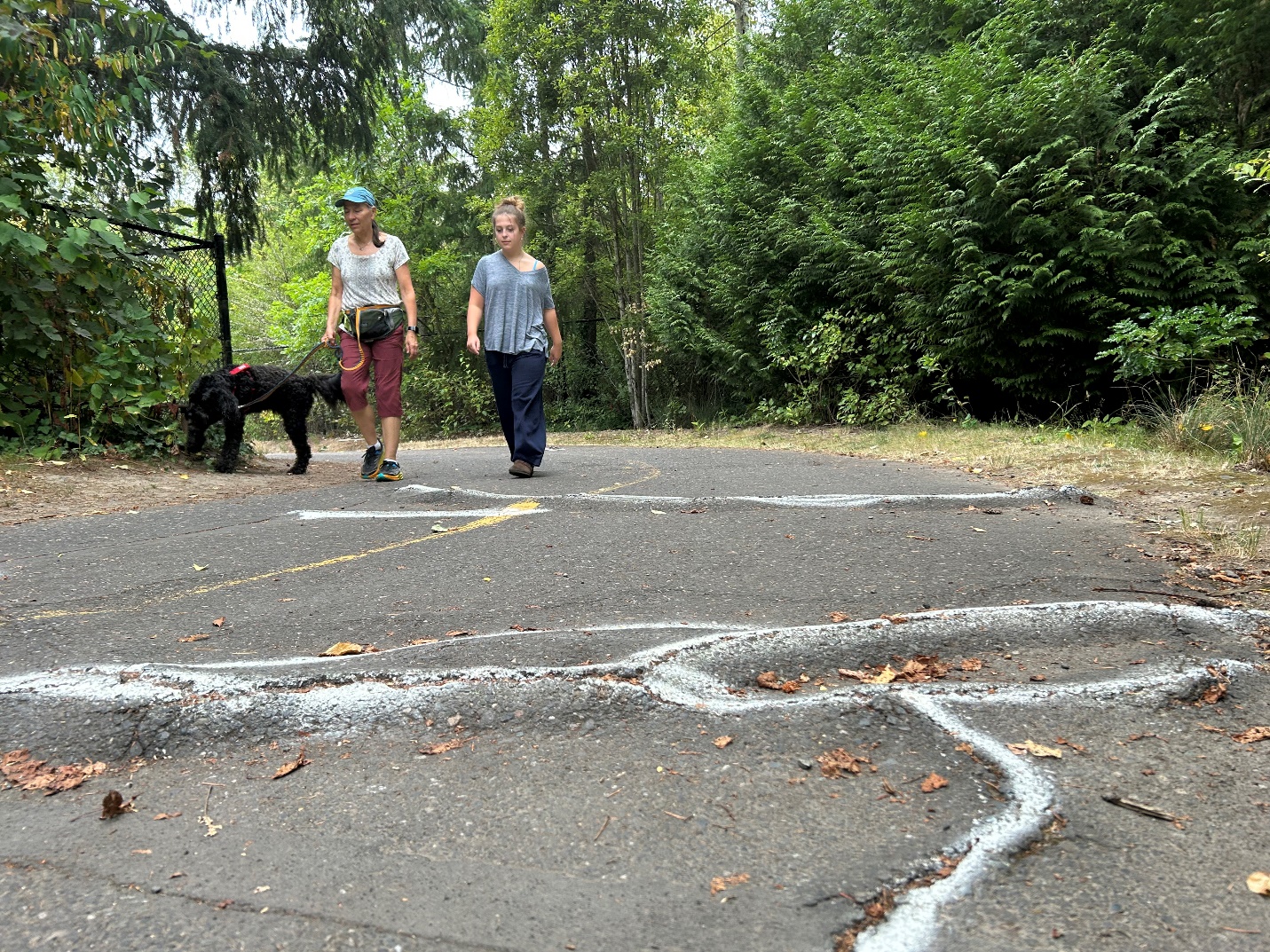
The bond would fund projects to repave trails to improve safety and accessibility and construct new portions of trails where gaps exist.
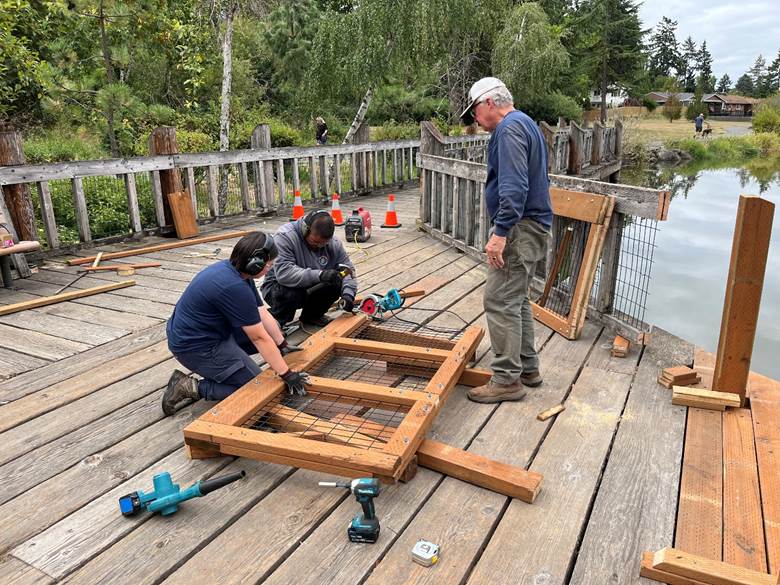
The bond would fund repairs to park structures.
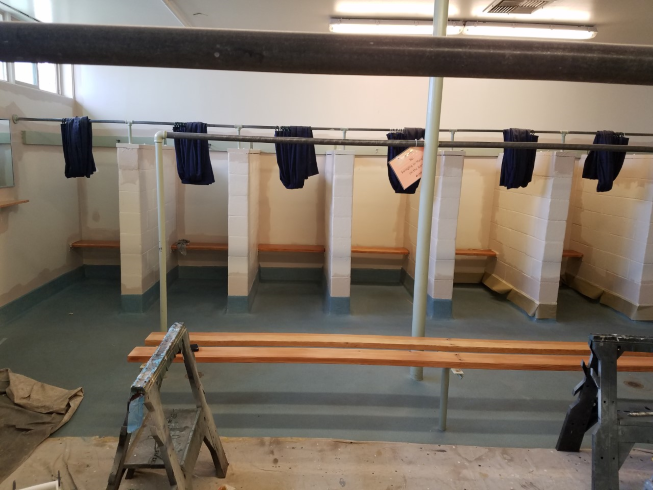
The bond would fund upgrades to aging facilities and improve pools, changing rooms, and public restrooms.
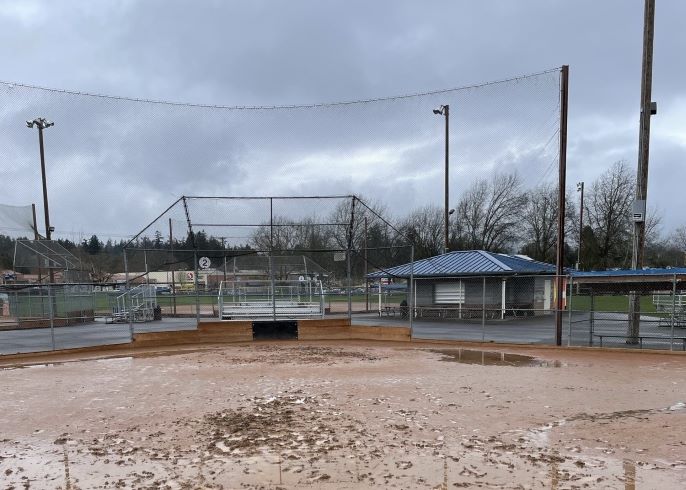
The bond would fund updates and repair sports fields and courts.
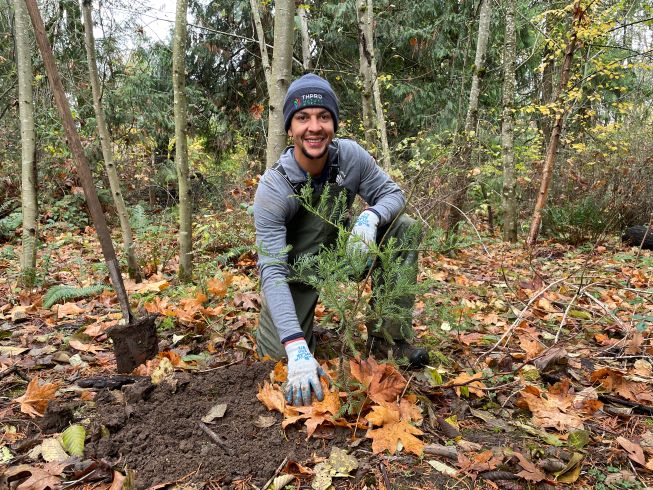
The bond would fund projects to protect and preserve parks, trails, and natural areas.
THPRD 2026 Bond Replacement Information
THPRD Board of Directors Refers Bond Measure to District Voters this May: In January, the THPRD Board of Directors voted unanimously to refer a bond measure to district voters. The proposed measure would fund repairs, maintenance, and safety improvements at parks, trails and facilities. In 2008, voters approved a bond measure which is about to be paid in full. This proposed measure would be timed to begin after the previous measure ends.
The replacement bond is primarily focused on maintaining and extending the operational life of existing assets throughout the district. The bond would fund the next 20 years for capital improvement needs, including:
Repair and Update Parks, Trails, and Facilities; Protect Natural Areas: Repair parks, trails, boardwalks, recreation centers, sports fields, courts, pools, playgrounds, equipment, and protect natural areas. A portion of funds would be for targeted land acquisition and updated amenities.
Improve Safety and Accessibility: Address safety and accessibility concerns, upgrade lighting, replace aging security and fire suppression systems.
Infrastructure Improvements: Replace roofs, heating/ cooling systems, energy efficiency improvements, building infrastructure. Modernize building entrances to address safety and accessibility issues.
Continuing Similar Tax Rate
THPRD estimates the tax rate for the 2026 bond measure to be $0.37 cents per $1,000 in assessed value or $120.41 a year, or $10.03 cents per month for 20 years. This is the same rate that was targeted by THPRD with the 2008 ask. Actual levy rates will fluctuate based on final interest rates and property value changes. For the 2008 bond measure, the actual levy rate fluctuated between $0.27 cents to $0.32 cents per $1,000 in assessed value.
Community Oversight
The district developed the bond proposal with the help of the district’s community-led Bond Task Force. And in keeping with the district’s approach to managing the 2008 bond measure, the district will have a community oversight committee to provide advice and guidance on the implementation of the 2026 bond measure, if approved by voters. The work will also be included in the district’s annual financial audit process.
If the replacement bond passes, how much property tax would homeowners pay and for how long?
Why is THPRD asking voters to consider a bond measure this year?
The bond approved by THPRD voters in 2008 is set to expire. It funded land purchases, facility upgrades, new trails, athletic fields, and the preservation of natural areas. By refinancing and completing projects under budget, THPRD saved millions — allowing for early bond retirement.
THPRD's goal is to maintain the previous tax rate that was targeted in the 2008 bond measure. The district's proposal would be to raise $280 million to finance bonds over the next 20 years to pay for capital infrastructure needs.
The proposed measure is timed so that if it is approved, taxpayers would continue to pay a rate similar to what they do today, after the 2008 measure ends.
If the replacement bond passes, how much property tax would homeowners pay and for how long?
For a home within Tualatin Hills Park & Rec District with an assessed value of $325,421 the estimated cost would be approximately $10.03 per month or $120.41 per year, over a period of 20 years.
And this is the same rate ($0.37 cents) that we targeted in 2008. In actuality, property tax owners have paid a range of $0.27 cents to $0.32 cents per $1,000 in assessed value for the 2008 bond measure (even though our initial target was $0.37). This is due to a number of factors from fluctuations in final interest rates on the bonds, to the fact THPRD was able to refinance the bonds at one point and saved a great deal of cost - lowering the rate for taxpayers, property value changes (as properties increase in value over time this lowers the cost share across taxpayers), and increases in territory or significant redevelopment of properties can also impact the tax base.
The proposed projects would be postponed or eliminated. Over time, without capital replacement funding from a bond measure, THPRD would face having to close some facilities, or portions of facilities, due to safety concerns or unmet maintenance needs. For example, if roofs fail, or mechanical systems fail inside buildings, they can become inoperable.
Parks, trails and sports amenities throughout the district could face closure or elimination. For example, if the district cannot fund safety repairs for trails, boardwalks, etc. those amenities would have to be closed to the public until safe to operate.
Other projects would be funded piece-meal over multiple years and would have to compete with other infrastructure needs for a share of the current funding sources.
Capital needs projects would also have to be funded with more expensive financing methods and ultimately cost more money over time.
How has the community been involved and what does oversight look like?
In August 2025, 13 community members were appointed by the THPRD Board to serve on the 2026 Bond Task Force. The task force members strongly encouraged THPRD to focus the 2026 bond measure on taking care of what the district has already built. They wanted THPRD to improve safety and maintain the current built environment first.
What is the difference between this replacement bond measure and the 2024 THPRD levy?
Bonds primarily fund major capital projects, like building renovations, park and trail development or repairs, land acquisition, and more. This bond would be scheduled over the next 20 years. Levies typically fund day-to-day operations, like staffing, utilities, and supplies. The 2024 THPRD levy was a five-year measure to support ongoing operational expenses for staffing and programs.